The Complete Guide to Passive Fire Protection in Dubai
High-Rise Buildings in 2026
Did you know that in high-rise fires, passive fire protection systems can be the difference between a contained incident and a catastrophic disaster? In Dubai, where iconic towers like the Burj Khalifa define the skyline and construction continues at a remarkable pace, passive fire protection isn't just a regulatory requirement, it's a critical investment in life safety and property preservation.
Yet despite its importance, passive fire protection remains one of the most misunderstood aspects of building safety. Many developers and contractors confuse it with active systems like sprinklers and alarms, while others underestimate its complexity until inspection failures force costly remediation.
This comprehensive guide covers everything you need to know about passive fire protection in Dubai's high-rise construction environment. Whether you're an MEP consultant specifying systems, a general contractor managing installation, or a developer ensuring regulatory compliance, you'll learn the technical fundamentals, UAE-specific requirements, and best practices that ensure your passive fire protection systems perform when it matters most.
Drawing on Sasko Prime's two decades of combined experience delivering passive fire protection for major UAE developers and main contractors, this guide provides the practical insights you need to get passive fire protection right the first time.
What is Passive Fire Protection?
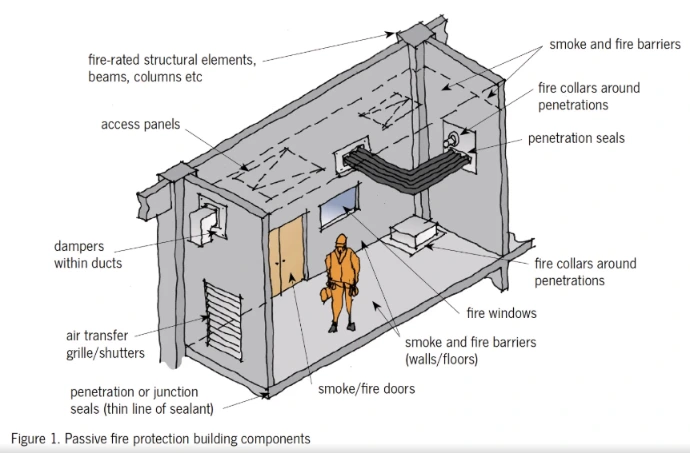
Passive fire protection refers to components built into a building's structure that contain or slow the spread of fire and smoke without requiring activation or human intervention. Unlike active fire protection systems (sprinklers, alarms, suppression systems) that respond to fire, passive systems are always working; integrated into walls, floors, structural elements, and penetrations throughout the building.
The fundamental principle is compartmentation, dividing a building into fire-resistant compartments that prevent fire and smoke from spreading beyond their point of origin. This containment achieves three critical objectives:
- Protect life: Provide time for safe evacuation by slowing fire spread
- Protect property: Limit fire damage to the compartment of origin
- Enable firefighting: Give firefighters time to respond and access affected areas safely
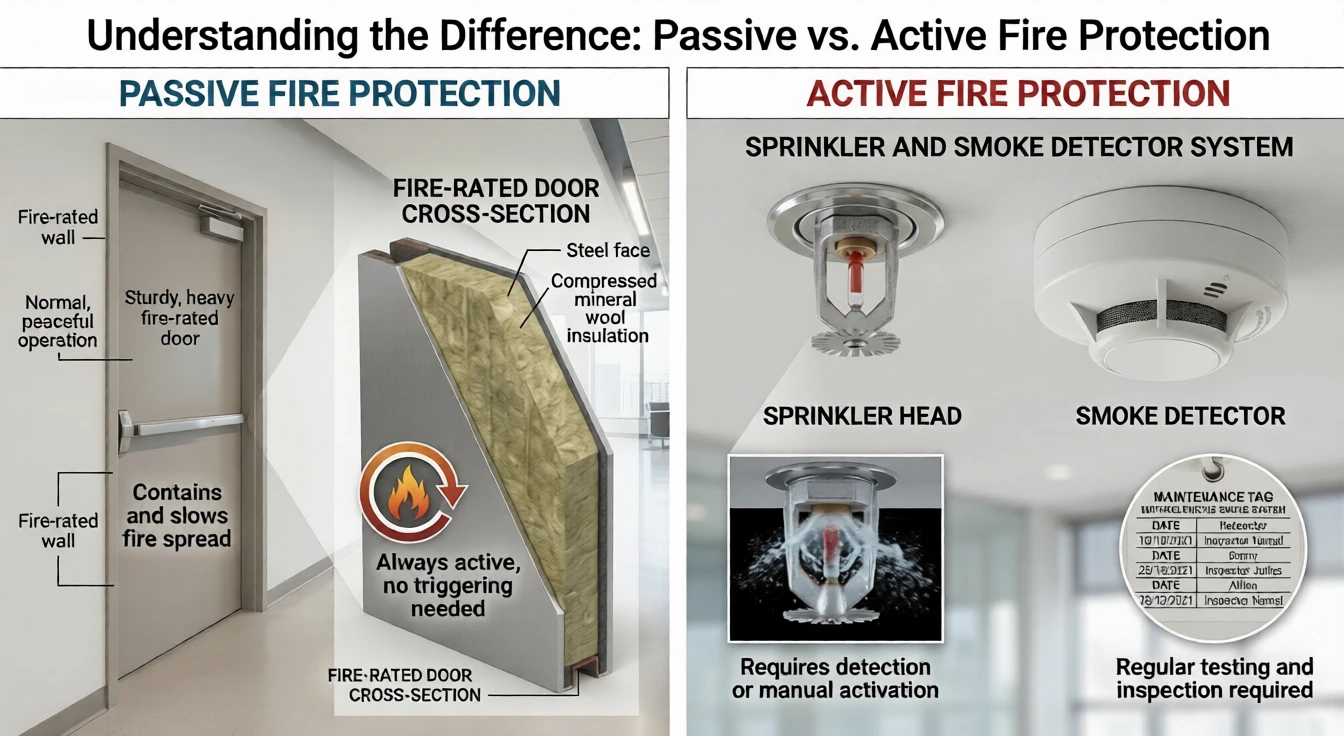
Passive vs. Active Fire Protection: Understanding the Difference
Many people confuse passive and active fire protection. Here's the key distinction:
| Characteristic | Passive Fire Protection | Active Fire Protection |
|---|---|---|
| Activation | Always active, no triggering needed | Requires detection or manual activation |
| Examples | Fire-rated walls, doors, firestopping, fireproofing | Sprinklers, smoke alarms, fire extinguishers, suppression systems |
| Function | Contains and slows fire spread | Detects and suppresses fire |
| Maintenance | Minimal once installed correctly | Regular testing and inspection required |
Both systems are essential and work together to provide comprehensive fire safety. However, passive systems form the foundational layer of protection, if compartmentation fails, active systems alone cannot prevent catastrophic fire spread in high-rise buildings.
Key Components of Passive Fire Protection Systems
Passive fire protection in Dubai high-rises comprises several integrated components. Understanding each element and how they work together is essential for proper system design and installation.
1. Fire-Rated Barriers (Walls, Floors, Ceilings)
Fire-rated barriers form the compartments that contain fire. In Dubai high-rises, these typically include:
- Fire-rated walls: Separating apartments, corridors, exit stairs, and different occupancies
- Fire-rated floors: Preventing vertical fire spread between levels
- Fire-rated ceilings: Protecting structural elements and creating protected pathways
Fire resistance ratings (60 minutes, 90 minutes, 120 minutes, etc.) indicate how long a barrier can withstand fire exposure while maintaining structural integrity, preventing flame passage, and limiting heat transfer to the unexposed side.
2. Fire Doors and Fire Dampers
Fire doors are openings in fire-rated barriers that allow passage while maintaining compartmentation. Critical specifications include:
- Matching or exceeding the fire rating of the wall they're installed in
- Self-closing mechanisms that ensure doors remain closed
- Intumescent seals that expand when exposed to heat, sealing gaps
- Proper installation with no gaps around the frame
Fire dampers serve the same function in HVAC ductwork, automatically closing when exposed to heat to prevent fire spread through ventilation systems.
3. Firestopping Systems
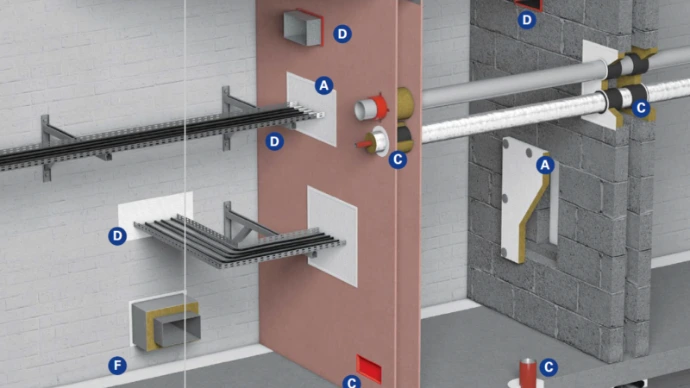
Firestopping seals penetrations in fire-rated barriers where pipes, cables, ducts, and conduits pass through walls and floors. This is one of the most critical and frequently compromised aspects of passive fire protection.
Common penetration types requiring firestopping:
- MEP penetrations (plumbing pipes, HVAC ducts, electrical conduits)
- Cable trays and communication cables
- Structural penetrations (steel beams passing through walls)
- Construction joints between prefabricated elements
Firestopping materials include intumescent sealants, fire-rated caulks, mineral wool, fire-rated boards, and specialty collars. The specific system must be matched to the penetration type, barrier rating, and tested configuration.
4. Structural Fire Protection (Fireproofing)
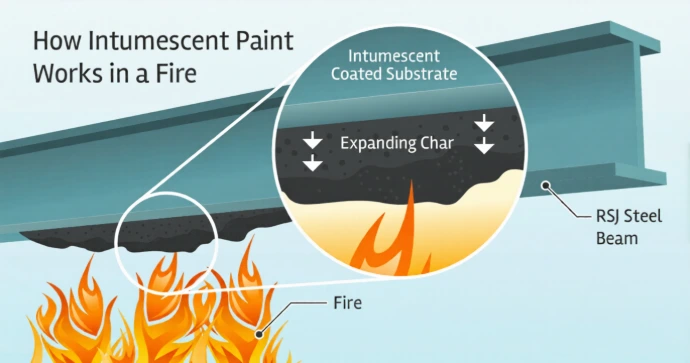
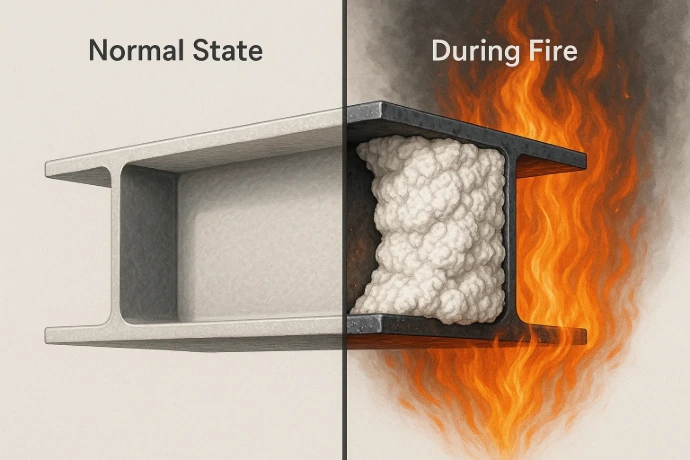
Steel structural elements lose strength rapidly when exposed to fire, potentially leading to collapse. Structural fireproofing protects load-bearing steel columns, beams, and floor decks. Two primary methods are used in Dubai:
Cementitious fireproofing: Spray-applied cement-based coating that insulates steel from heat. Economical and effective for large areas, commonly used in parking garages and commercial spaces.
Intumescent coatings: Thin-film paint-like coatings that expand when heated, forming an insulating char layer. Preferred for architecturally exposed steel where aesthetics matter, such as building lobbies or feature columns.
The required thickness and fire rating depend on the steel's section size, applied load, and required fire resistance period specified in the building design.
UAE Civil Defense Requirements for Passive Fire Protection
Passive fire protection in Dubai is governed by the UAE Fire and Life Safety Code of Practice, enforced by Dubai Civil Defense. Compliance is not optional, it's mandatory for obtaining occupancy certificates and avoiding costly remediation orders.
Fire Resistance Ratings for High-Rise Buildings
Dubai Civil Defense categorizes buildings by height and occupancy, with corresponding fire resistance requirements:
| Building Height | Structural Elements | Separating Elements |
|---|---|---|
| Up to 28m | 60-90 minutes | 60 minutes minimum |
| 28m to 100m | 120 minutes | 90-120 minutes |
| Over 100m | 120-180 minutes | 120 minutes minimum |
Note: These are general guidelines. Specific requirements vary based on occupancy type (residential, commercial, assembly, etc.) and building classification. Always verify requirements with Dubai Civil Defense and your approved consultant.
Testing and Certification Requirements
All passive fire protection products and systems used in UAE construction must meet these requirements:
- Third-party testing: Products must be tested by recognized laboratories (UL, Intertek, Warrington Fire, etc.)
- Test standards: Systems must comply with international standards (ASTM E814, BS 476, EN 1366, etc.)
- Installation per listing: Field installation must match tested and listed configurations exactly
- Documentation: Test reports, product data sheets, and installation records must be provided for Civil Defense inspection
Critical point: Using products without proper certification or deviating from tested configurations will result in inspection failures and mandatory remediation, even if the installation appears adequate.
Inspection and Approval Process
Dubai Civil Defense conducts multiple inspections during construction:
- Design approval: Fire protection drawings must be approved before construction begins
- Progress inspections: Firestopping and fireproofing inspected before being concealed by finishes
- Final inspection: Comprehensive review of all passive and active fire protection systems
- Occupancy certificate: Issued only after all fire safety systems pass inspection
Developers should schedule inspections proactively and maintain detailed installation records, including photographs of firestopping before concealment. These records are invaluable if questions arise during final inspection.
Firestopping vs. Fireproofing: When to Use Each
Two terms frequently confused in passive fire protection are firestopping and fireproofing. While both protect against fire, they serve distinct purposes and are used in different applications.
Firestopping: Sealing Penetrations
Purpose: Maintain the fire-resistance rating of barriers (walls, floors) where they are penetrated by services
Applications:
Electrical conduits passing through fire-rated walls
Plumbing pipes penetrating floor slabs
HVAC ducts crossing fire barriers
Cable trays in shafts and risers
Construction joints between wall sections
Materials used: Intumescent sealants, fire-rated caulk, mineral wool, fire-rated boards, mechanical firestop devices (collars, wraps)
Fireproofing: Protecting Structural Steel
Purpose: Insulate structural steel elements to prevent strength loss and collapse during fire exposure
Applications:
Steel columns supporting building loads
Steel beams and trusses
Metal floor decking
Exposed structural connections
Materials used: Spray-applied cementitious coatings, intumescent paint systems, gypsum board encasement
Quick Decision Guide
Use firestopping when: Sealing holes, gaps, or penetrations in fire-rated walls and floors
Use fireproofing when: Protecting load-bearing steel structural elements from heat
Important: Many projects require both. A typical Dubai high-rise needs fireproofing on the steel structure AND firestopping at every service penetration through fire-rated barriers. Both are essential for complete passive fire protection.
Common Passive Fire Protection Failures in Dubai High-Rises
Despite clear regulations, passive fire protection failures remain common in UAE construction. Based on Sasko Prime's experience remediating dozens of projects, here are the most frequent issues and how to prevent them.
1. Incomplete or Missing Firestopping
The Problem: Penetrations left unsealed or only partially filled, typically discovered during Civil Defense inspection after drywall is installed.
Common causes:
Poor coordination between MEP and firestopping trades
Late-stage service additions without corresponding firestopping
Assumption that small penetrations don't need sealing
Lack of inspection before concealment
Prevention: Implement a firestopping inspection checklist before any penetration is concealed. Photograph every sealed penetration. Coordinate closely with MEP contractors to track all penetrations.
2. Using Non-Certified or Incorrect Materials
The Problem: Firestopping installed with materials that lack proper testing or don't match the penetration type.
Examples:
Using standard expanding foam instead of fire-rated sealant
Sealing combustible plastic pipes without tested firestop collars
Applying materials thinner or thicker than tested specifications
Substituting similar-looking but non-certified products to save costs
Prevention: Specify products by manufacturer and model number. Require product data sheets and test reports. Conduct random inspections to verify correct materials are being used. Never accept substitutions without engineer approval.
3. Installation Not Matching Tested Configuration
The Problem: Firestopping installed differently from the tested and listed system, invalidating the fire rating.
Common deviations:
Annular space (gap around penetration) too large or too small
Different wall/floor construction than tested
Multiple pipes in single penetration not matching tested configuration
Omitting required backer materials or support
Prevention: Provide installers with system drawings and tested configurations. Train field personnel on proper installation. Match penetration details to tested systems before installation begins.
4. Inadequate Fireproofing Coverage
The Problem: Structural steel protected with insufficient thickness or incomplete coverage of fireproofing material.
Common issues:
Thickness below required specification
Gaps in coverage at connections and corners
Damage during subsequent trades' work not repaired
Missing fireproofing on connection plates and attachments
Prevention: Measure thickness using density gauges. Conduct visual inspections for complete coverage. Protect installed fireproofing from damage. Establish touch-up procedures for any damaged areas.
5. Lack of Documentation
The Problem: Unable to demonstrate compliance during Civil Defense inspection due to missing records.
Required documentation often missing:
Product test reports and certifications
Installation photos before concealment
As-built drawings showing firestop locations
Fireproofing thickness test records
Prevention: Establish documentation procedures from day one. Assign responsibility for record-keeping. Create digital photo archive organized by location. Compile inspection package before final Civil Defense review.
Best Practices for Passive Fire Protection Success
Successfully implementing passive fire protection in Dubai high-rises requires coordination, planning, and attention to detail throughout the construction process.
Design Phase
Coordinate early: Involve fire protection specialists during design development, not after MEP is finalized
- Detail penetrations: Show firestopping details on construction drawings, not just notes
- Specify complete systems: Reference manufacturer systems by number, include all components
- Plan access: Ensure installers can reach all penetrations and steel elements
Procurement Phase
Verify certifications: Require test reports before material delivery
Quality over price: Passive fire protection is 2-3% of construction costs; don't compromise on cheap alternatives
Order adequate quantities: Account for waste, testing, and potential re-work
Stock spare materials: Keep extra inventory for late-stage changes and touch-ups
Installation Phase
Use trained installers: Passive fire protection requires specialized skills; verify installer credentials
Follow sequences: Install firestopping before finishes conceal penetrations
Inspect progressively: Don't wait until final inspection to discover problems
Protect completed work: Prevent damage from subsequent trades
Document everything: Photos, thickness tests, material certifications
Inspection Phase
Conduct pre-inspection: Internal review before Civil Defense visit
Prepare documentation package: Organized binder with all required records
Provide access: Ensure inspectors can view representative samples
Address findings promptly: Correct deficiencies immediately, don't delay
Conclusion: Passive Fire Protection as Foundation of Building Safety
Passive fire protection is not an afterthought or a box-checking exercise, it's the foundational layer of fire safety that makes the difference between containable incidents and catastrophic disasters. In Dubai's high-rise environment, where evacuation is complex and fire spread could affect hundreds of occupants, properly designed and installed passive fire protection systems are essential.
Key takeaways from this guide:
Passive fire protection works 24/7 without activation, containing fire through compartmentation
Key components include fire-rated barriers, doors, firestopping, and structural fireproofing
Dubai Civil Defense requirements are mandatory and enforced through multiple inspections
Firestopping seals penetrations while fireproofing protects structural steel, both are essential
Common failures include missing firestopping, wrong materials, and poor documentation
Success requires coordination from design through installation and inspection
By investing in quality passive fire protection; proper design, certified materials, skilled installation, and thorough documentation, developers protect lives, preserve property value, and ensure smooth project approvals. The cost of doing it right the first time is always less than the cost of remediation after inspection failure.
Need Expert Passive Fire Protection for Your Dubai Project?
Sasko Prime has over 20 years of combined experience delivering compliant passive fire protection systems for major UAE developers and main contractors. Our specialized team handles everything from firestopping and fireproofing to complete passive fire protection design and installation.
Whether you're planning a new high-rise project or need remediation of existing systems, we ensure full Dubai Civil Defense compliance and first-time inspection approvals.
Contact Sasko Prime today for a detailed consultation and project quotation.
📧 sales@saskoprime.com | 📞 +971 4 566 1489